
LUANDA, ANGOLA, 6 OCTOBER 2026, Westbrook Racing by Visit Angola has released its latest environmental monitoring report developed with EOMAP and the European Space Agency (ESA), providing an assessment of water quality and marine pollution conditions along the Luanda coastline.
The report follows a programme of environmental monitoring and stakeholder engagement carried out before, during and after the UIM E1 World Championship’s first race in Angola, combining satellite-based environmental intelligence with local expertise and in-situ monitoring undertaken by Angolan authorities.
Ahead of the race, Westbrook Racing by Visit Angola organised an environmental stakeholder meeting in Luanda to present the monitoring programme and preliminary findings. The meeting brought together representatives from the Luanda Provincial Government’s Offices for Environment, Waste Management and Community Services, and Institutional Communication, alongside representatives from the Ministry of Culture and Tourism, the Ministry of Agriculture, Livestock, Fisheries and Marine Resources, the National Directorate for Maritime Affairs and Blue Economy, the Vice-Governor’s Office, the National Institute for Fisheries and Marine Research (INIPM) and the National Space Programme Management Office (GGPEN).
Angolan authorities are complementing the satellite analysis with their own in-situ environmental monitoring and research. This local data and expertise will be considered alongside the satellite observations to consolidate the findings and help identify environmental priorities and potential initiatives ahead of E1’s return to Angola in 2027.
The programme forms part of Westbrook Racing by Visit Angola’s “Powering Performance with Purpose” sustainability strategy and uses satellite-based environmental intelligence to identify local conditions and areas of potential concern.
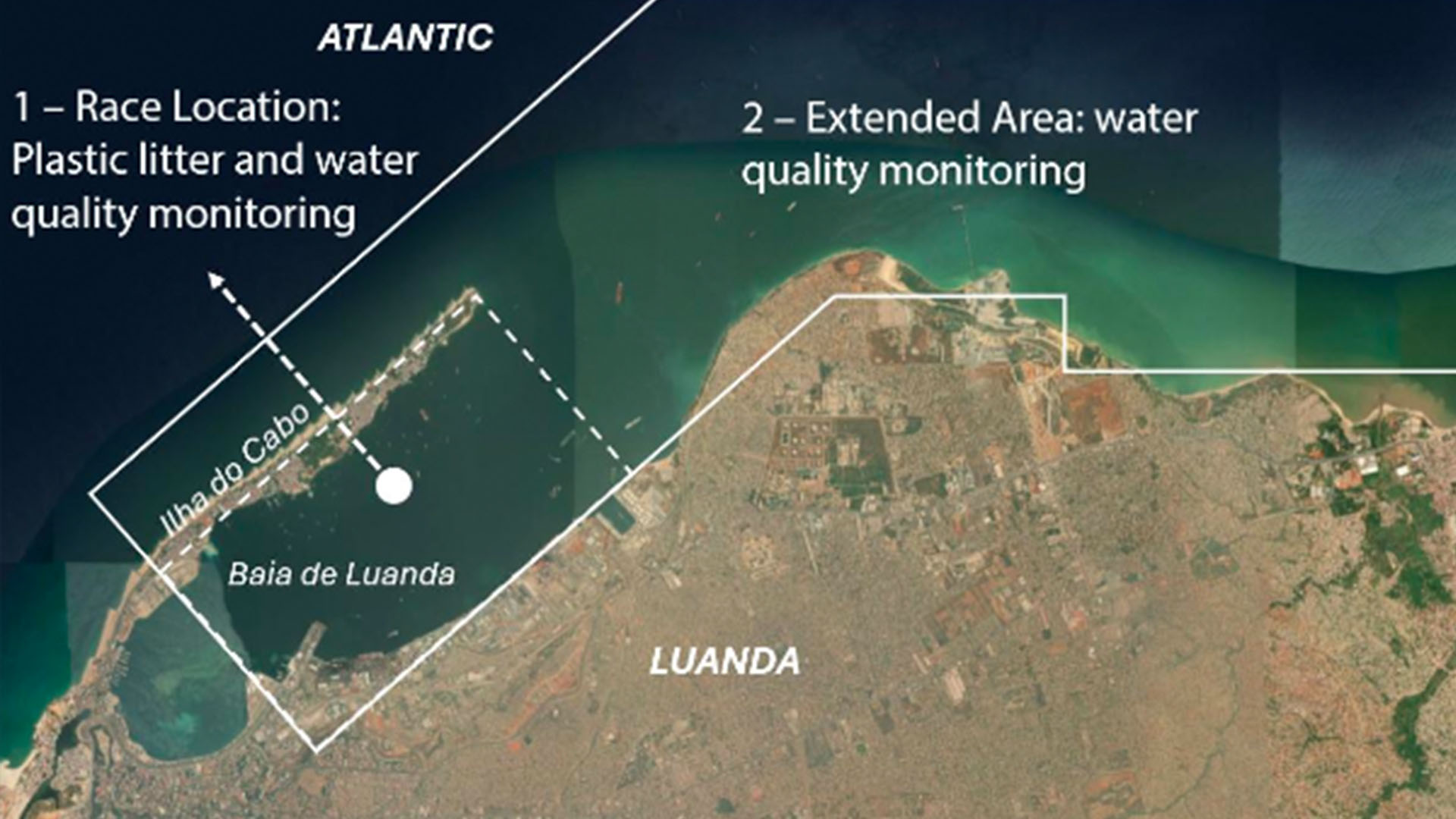
For the Luanda study, EOMAP analysed satellite observations across Luanda Bay and an extended area of coastline towards the mouth of the Bengo River. The programme covered observations from November 2025 through September 2026 and assessed indicators including chlorophyll concentration, water visibility, turbidity and floating plastic litter. Turbidity is expressed in Nephelometric Turbidity Units (NTU), the standard measure of water cloudiness caused by suspended particles.
The results show significant variations along the coastline. At Luanda Beach, average water visibility was approximately 9 metres, chlorophyll concentrations averaged around 2 micrograms per litre – an indicator used to estimate the amount of algae present – and turbidity remained below 1 NTU.
Further east towards the Bengo River, average chlorophyll concentrations exceeded 10 micrograms per litre, more than five times the average recorded at Luanda Beach, with levels reaching approximately 40 micrograms per litre in some observations. Turbidity averaged around 10 NTU and reached up to 50 NTU at individual locations, while average water visibility fell to approximately 2 metres.
The analysis also identified a higher algae risk in Eastern Luanda, particularly around river inflows, with conditions associated with sediments, nutrients and other material entering the coastal environment through the Bengo River and other river systems.
Within the proposed race location in Luanda Bay, the satellite analysis recorded zero confirmed floating plastic-litter detections during the monitoring period.
The programme is now moving from monitoring and analysis towards local action. Westbrook Racing by Visit Angola will continue working with Angolan authorities and institutions to combine the satellite findings with local monitoring and research and identify where environmental initiatives can deliver tangible local value.
This work will continue in the build-up to the 2027 UIM E1 World Championship race in Angola, creating a longer-term environmental programme around the championship’s presence in the country and Westbrook Racing by Visit Angola’s partnership with Angola.
– END –